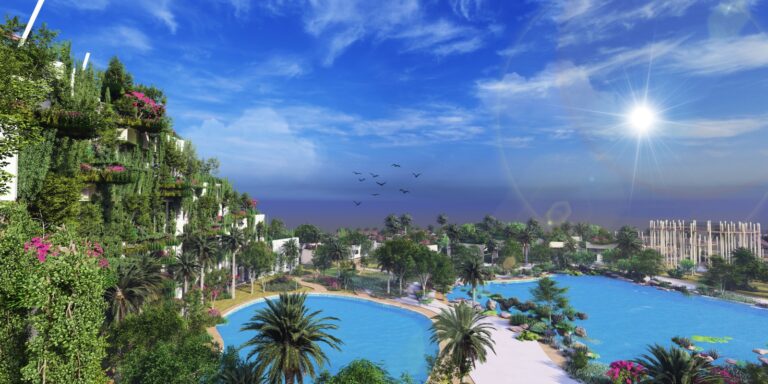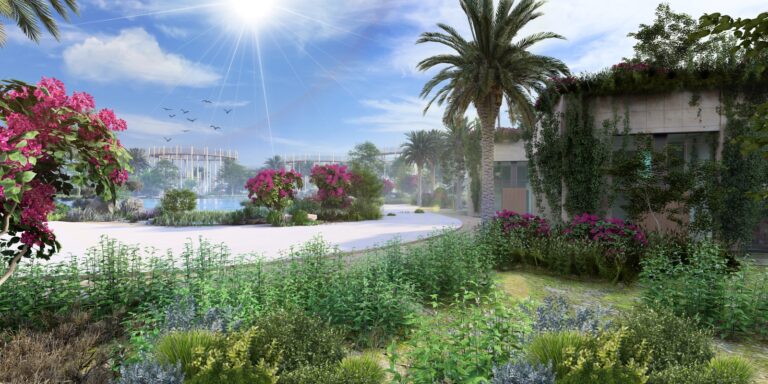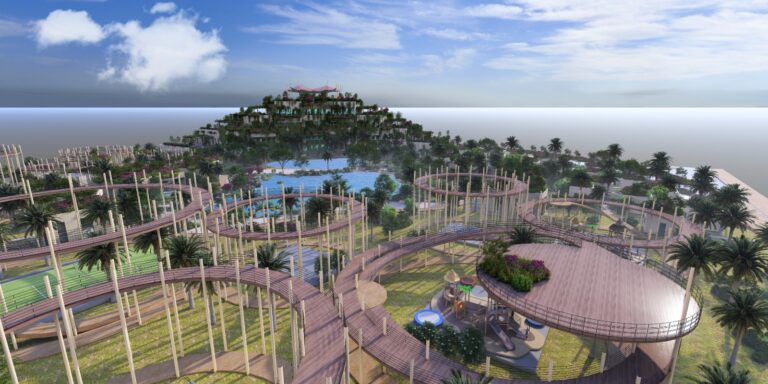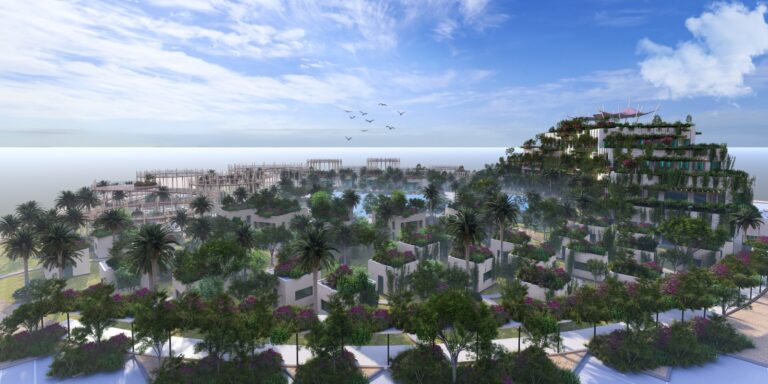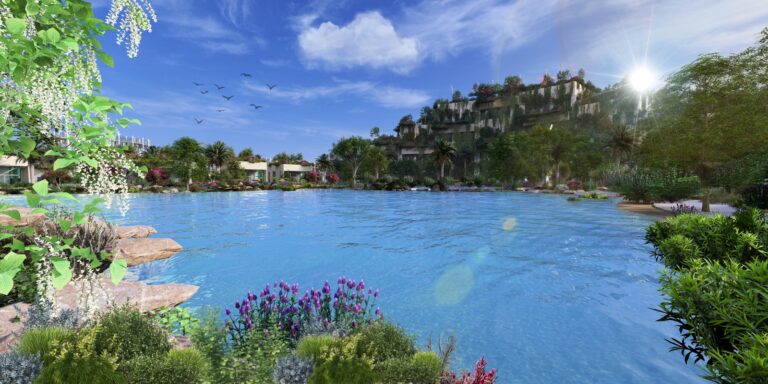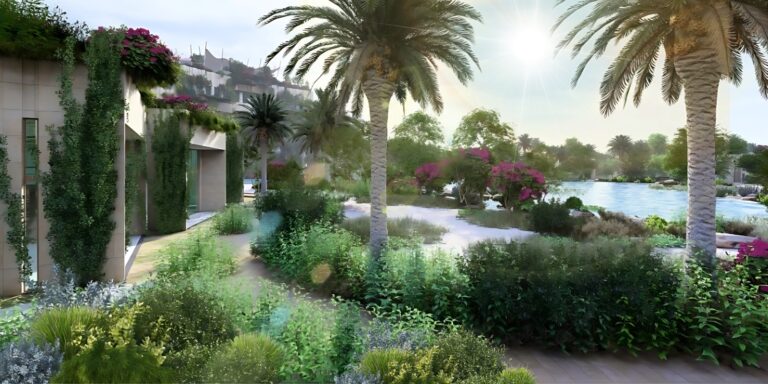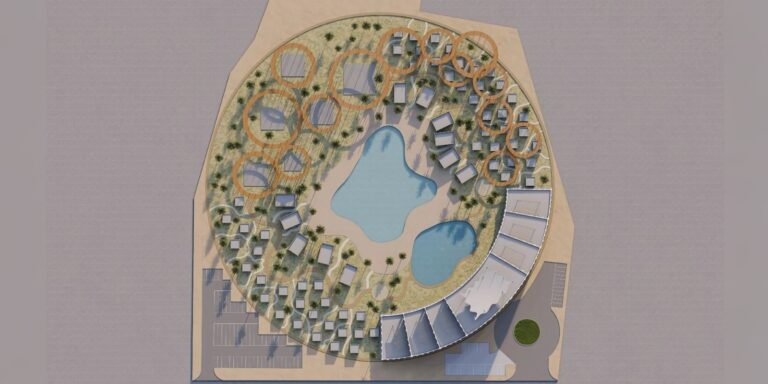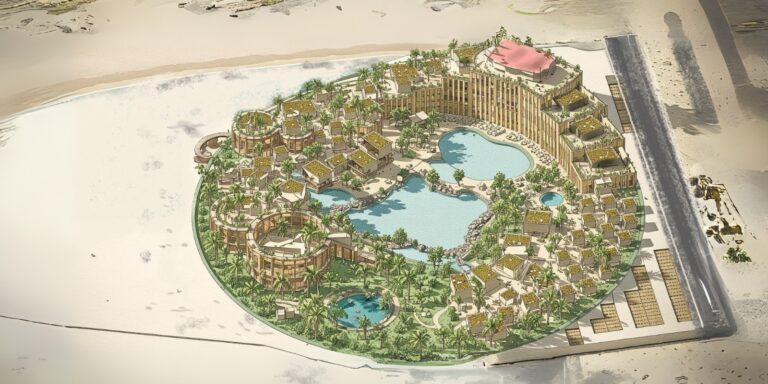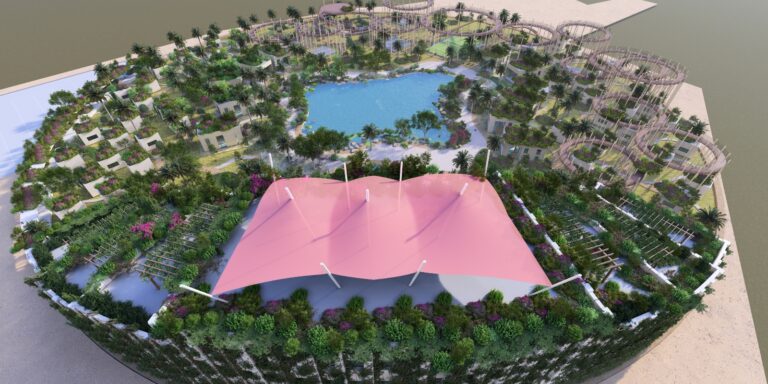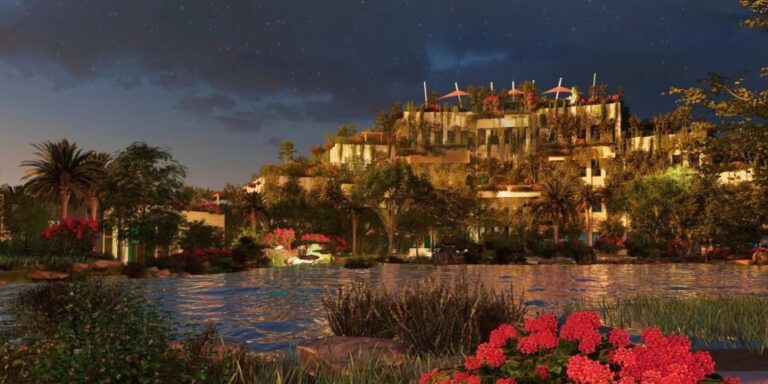
The design of Umluj Oasis was guided by a single principle, let the land lead. Every decision, from the placement of buildings to the choice of plants, emerged from the site’s rhythms of sun, wind, and sea. The 42,000 sqm masterplan is anchored by a central water feature, not as a decorative flourish, but as environmental infrastructure, cooling the air, creating habitat, and offering sensory relief. Around this, a sequence of boutique accommodations, wellness hubs, and cultural spaces unfolds, each carefully oriented to frame views, capture breezes, and provide shade. Movement through the resort is deliberately slow and immersive; shaded pedestrian corridors, lined with native flora and textured paving, replace vehicular routes, making every journey between zones a sensory experience in itself.
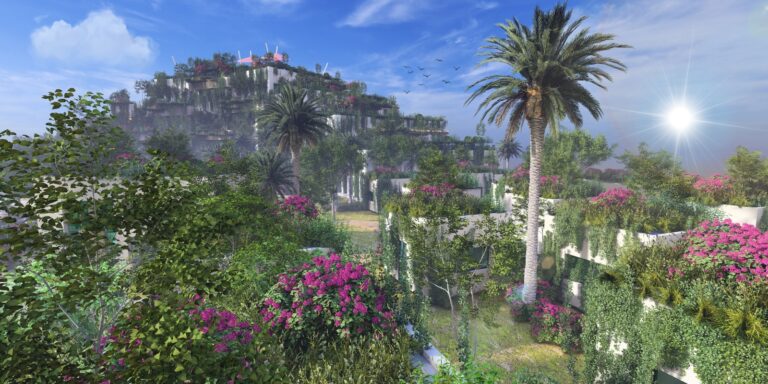
Architecture draws inspiration from local vernacular forms thick walls, screened openings, deep overhangs reinterpreted in a contemporary language that balances authenticity with elevated comfort. Materiality favours locally sourced stone, lime plasters, and timber detailing, chosen not just for their beauty but for their durability in the coastal climate. The landscape strategy embraces desert-adaptive and salt-tolerant planting, trees to coastal grasses and ground covers, creating a lush yet water-conscious environment that changes with the seasons and supports local biodiversity.
Green roofs and vertical gardens are integrated as living systems that regulate internal temperatures, reduce energy demand, and extend habitat for pollinators. These features also soften the architectural massing, blurring the boundaries between built form and nature. Passive design is at the heart of the approach wind corridors, shaded courtyards, and evaporative cooling from water edges replace heavy mechanical cooling, proving that comfort can be achieved through climate intelligence rather than excess consumption.
The programming is layered and intentional. Guests can move from a morning of coastal walks to a hands-on culinary workshop using regional ingredients, then gather for storytelling under the stars. Each activity reflects the spirit of place, encouraging a connection not only with the land but with the culture that shapes it. The phased development plan ensures that each stage of the resort is complete, operational experience, yet contributes seamlessly to the overall vision.
In a hospitality landscape often defined by spectacle, Umluj Oasis takes the quieter path of restraint offering a model for regenerative tourism in arid climates. It is a resort that does not impose itself upon the landscape but becomes part of it, a sanctuary where architecture, nature, and human experience are woven together to create a slower, deeper, and more meaningful way to travel.